Table of Contents
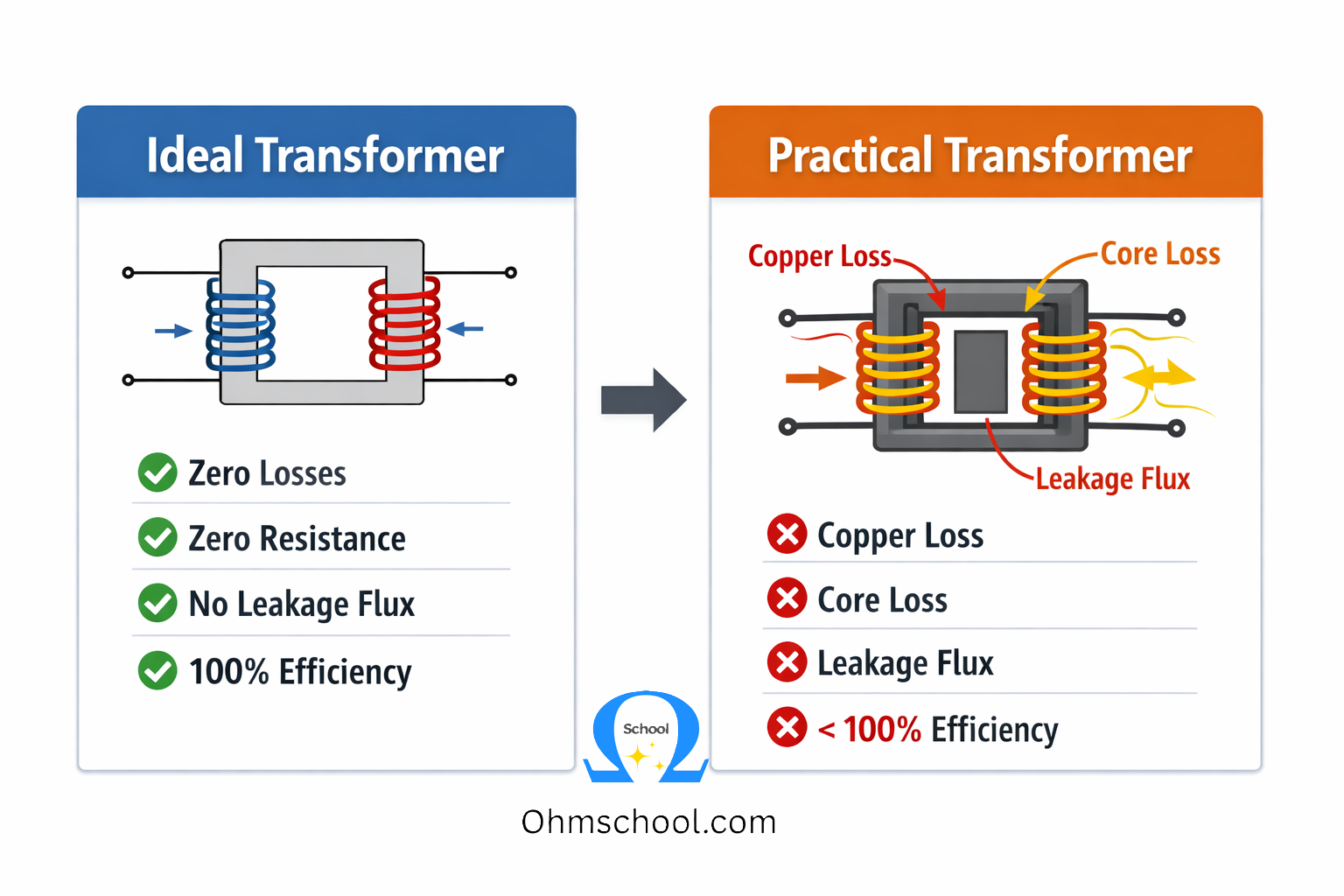
The difference between an ideal and a practical transformer is that an ideal transformer is a theoretical, loss-free device with 100% efficiency, while a practical transformer is a real device that has copper losses, core losses, leakage flux, and efficiency less than 100%.
- Ideal Transformer: A hypothetical transformer with no losses, zero resistance, and perfect magnetic coupling.
- Practical Transformer: A real transformer that includes winding resistance, magnetic losses, leakage flux, and voltage drops.
Ideal vs Practical Transformer (Comparison Table)
| Parameter | Ideal Transformer | Practical Transformer |
|---|---|---|
| Nature | Theoretical model | Real electrical device |
| Losses | No losses | Copper & core losses present |
| Efficiency | 100% | Less than 100% |
| Winding Resistance | Zero | Finite |
| Leakage Flux | Absent | Present |
| Core Permeability | Infinite | Finite |
| Voltage Regulation | Zero | Non-zero |
| Output Power | Equals input power | Less than input power |
| Practical Use | Only for study | Used in power systems |
What is an Ideal Transformer?
An ideal transformer is an imaginary device used only for learning and calculations. It assumes:
- Zero electrical resistance
- No magnetic losses
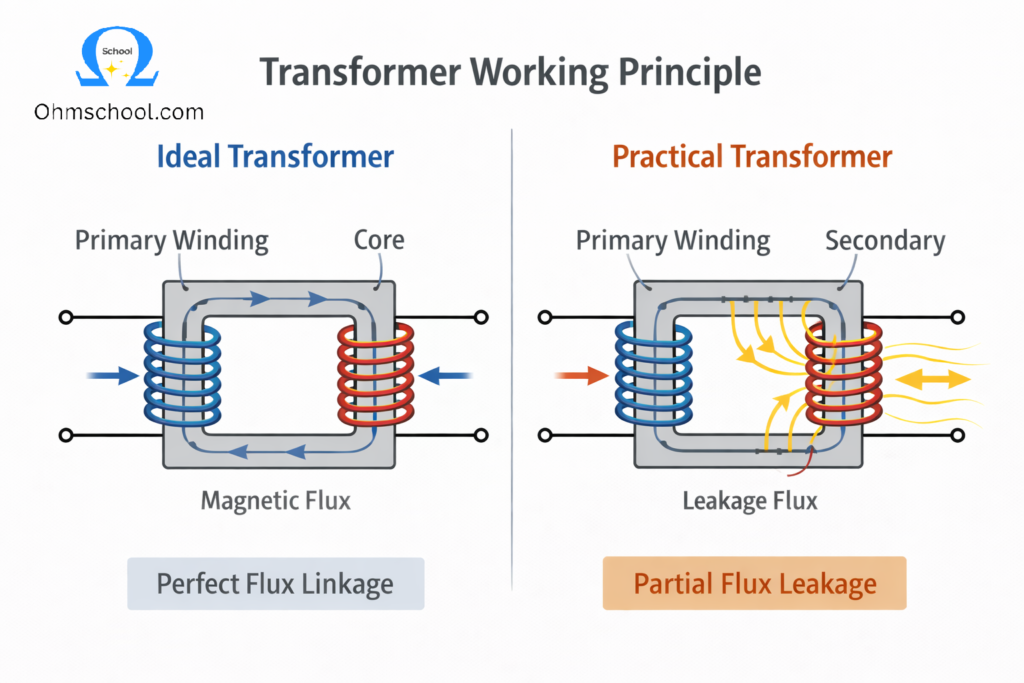
- No leakage flux
- Perfect energy transfer
👉 Important: Ideal transformers do not exist in real life.
What is a Practical Transformer?
A practical transformer is an actual transformer used in power transmission, distribution, and electronics. It has:
- Winding resistance
- Leakage reactance
- Core losses
- Voltage drop under load
👉 All transformers used in real systems are practical transformers.
Losses in Practical Transformer
1. Copper Loss
- Occurs due to resistance of windings
- Depends on load current
- Formula:
Copper Loss = I²R
2. Core (Iron) Loss
Occurs in the transformer core and is independent of load.
- Hysteresis Loss: Due to repeated magnetization of the core
- Eddy Current Loss: Due to circulating currents in the core
👉 Reduced using laminated silicon steel cores.
Efficiency Comparison
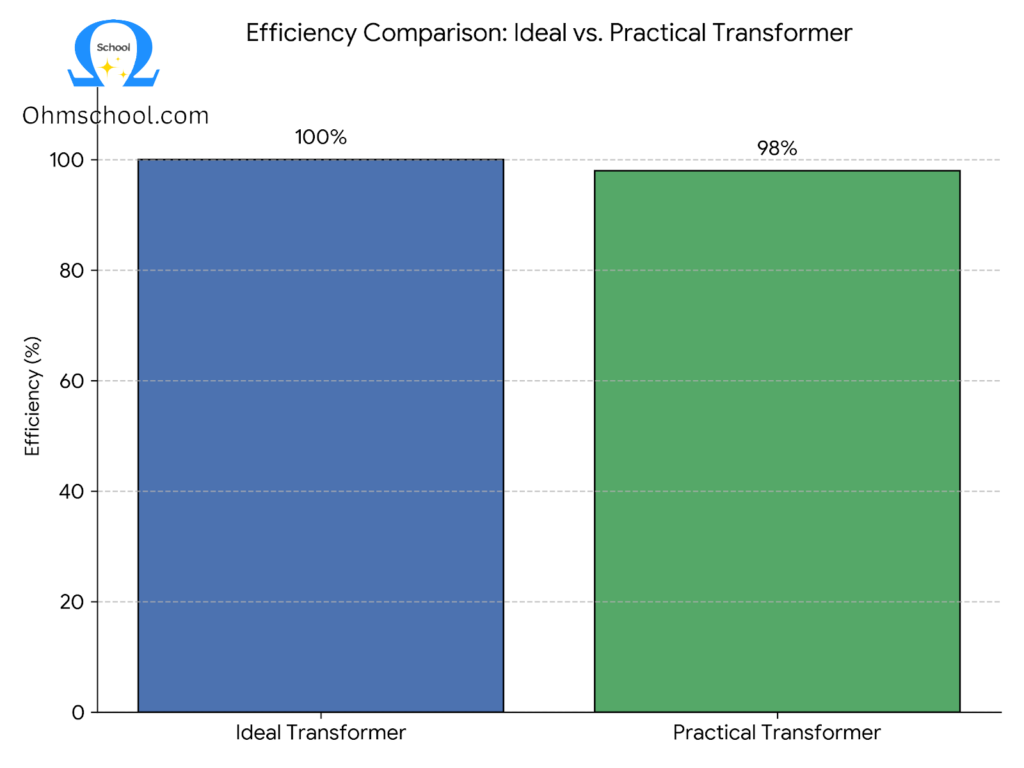
- Ideal Transformer Efficiency:
- Practical Transformer Efficiency: Modern practical transformers achieve 95%–99% efficiency.
Voltage Regulation Difference
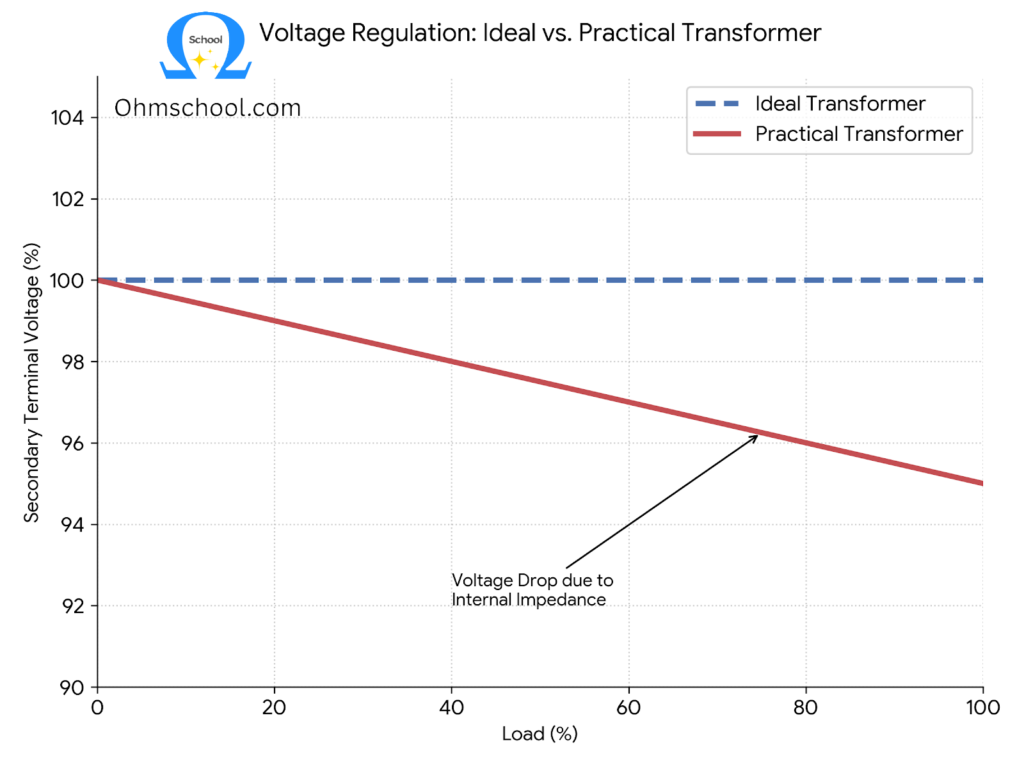
- Ideal Transformer:
No voltage drop, regulation = 0% - Practical Transformer:
Voltage drop occurs due to resistance and leakage reactance
Real-World Applications (Practical Transformer)
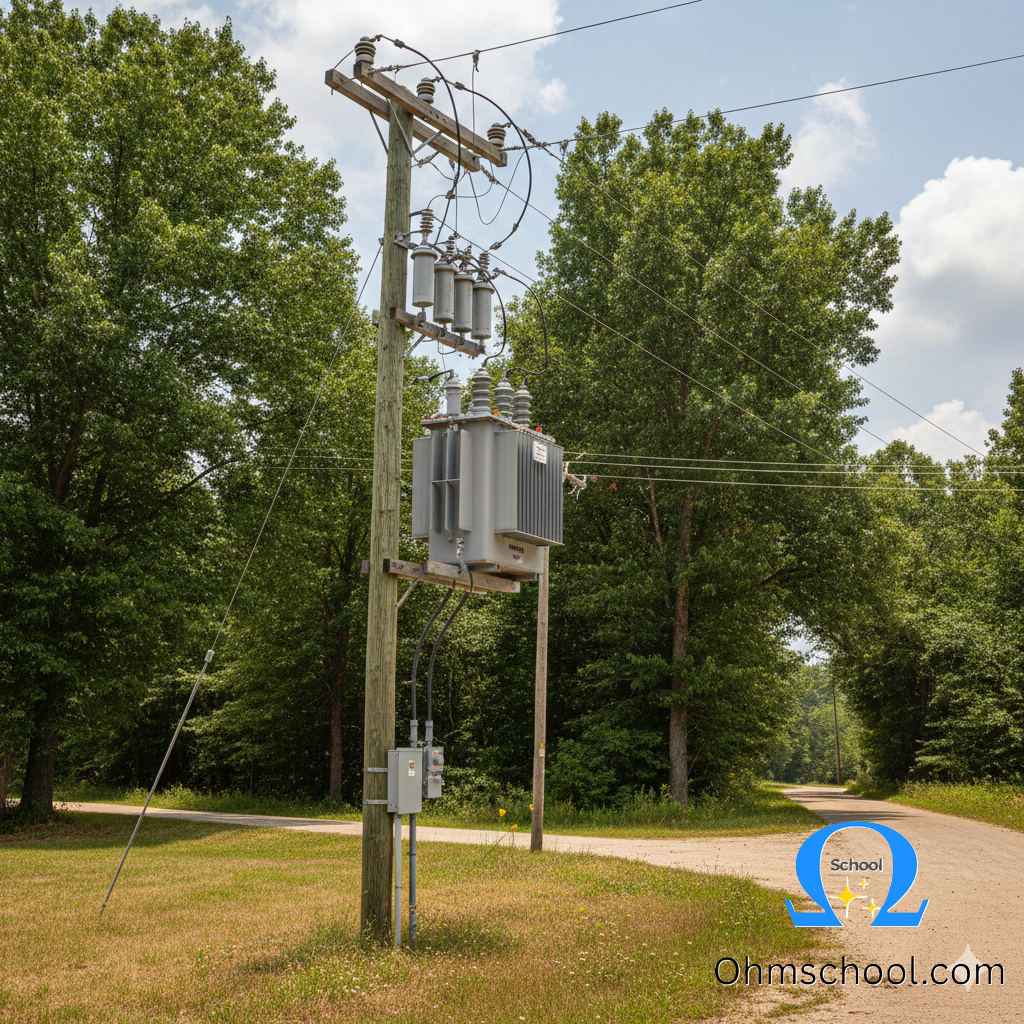
Practical transformers are used in:
- Power stations and substations
- Transmission and distribution networks
- Mobile chargers and adapters
- UPS and inverter systems
- Industrial electrical equipment
Exam-Focused Key Points
- Ideal transformer → no losses, imaginary
- Practical transformer → losses present, real
- Efficiency of ideal transformer = 100%
- Efficiency of practical transformer < 100%
- Practical transformer used in all real applications
Conclusion
An ideal transformer is a perfect theoretical concept, while a practical transformer is a real device affected by losses and inefficiencies. Understanding this difference is essential for electrical engineering exams, interviews, and practical system design.
FAQ – Ideal and Practical Transformers
Why do engineers study ideal transformers if they don’t exist?
Because ideal transformers simplify analysis, help understand working principles, and act as a reference model for practical transformers.